Recently, Vibe-coding has gained immense popularity. Many believe that with a good idea and the right tools like Cursor and Claude, products can automatically generate revenue.
However, as a former UI designer turned solo CEO, after creating several small programs and facing numerous challenges, I must offer a reality check:
In today’s world of nearly zero-cost coding, blindly “reinventing the wheel” will only lead to piles of worthless electronic junk.
Reflecting on my journey from starting Vibe-coding to now, I’ve discovered a crucial rule:
All products that survive and truly meet demands must start from “scratching your own itch.”
Today, I will break down the pitfalls I’ve encountered, the code I’ve abandoned, and my genuine commercial thoughts on MVP (Minimum Viable Product). I hope this helps those struggling in the independent development mire save months of trial and error costs.
Phase One: Overcoming Dark Moments of Independent Development with Instant Feedback
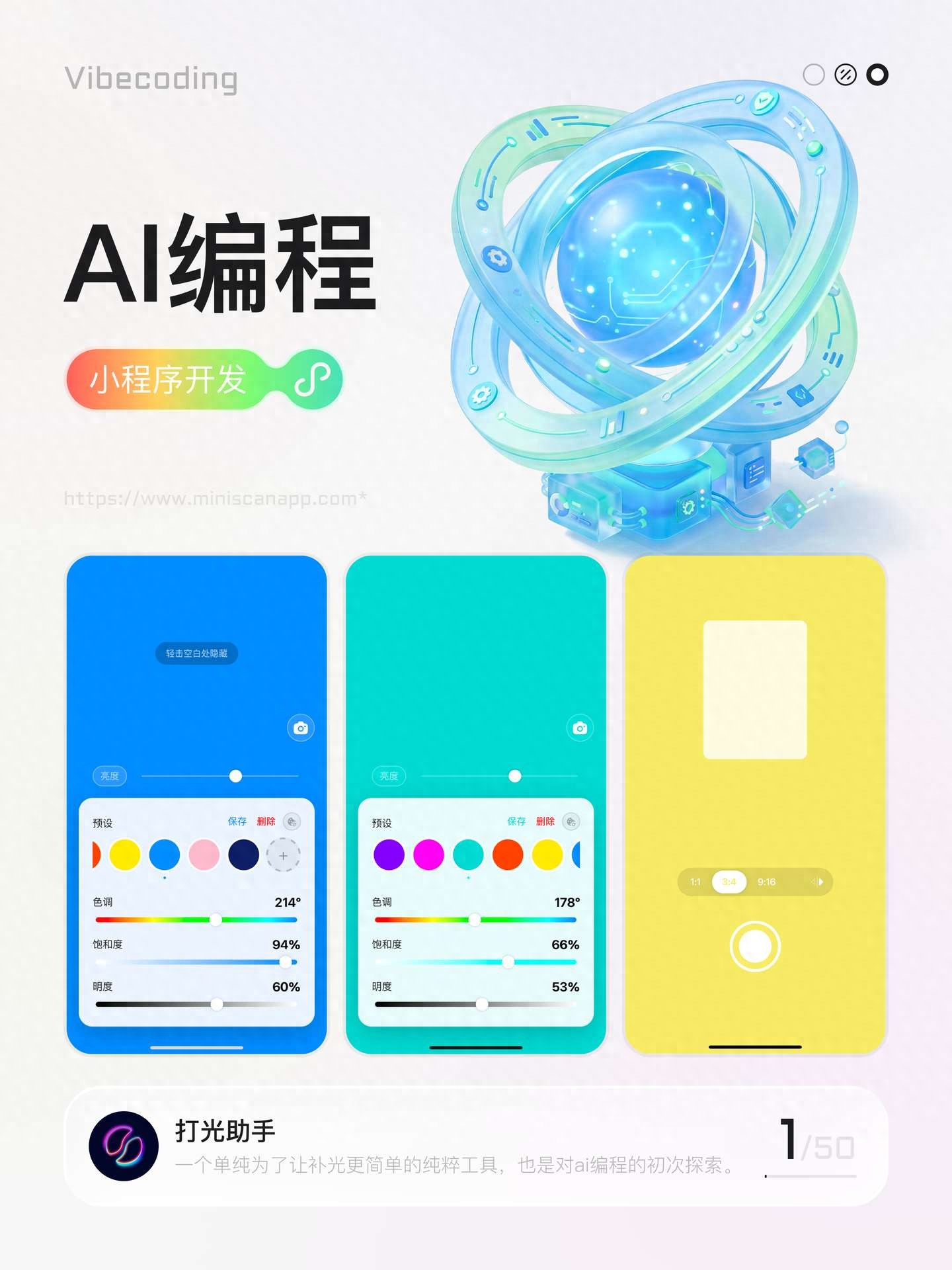
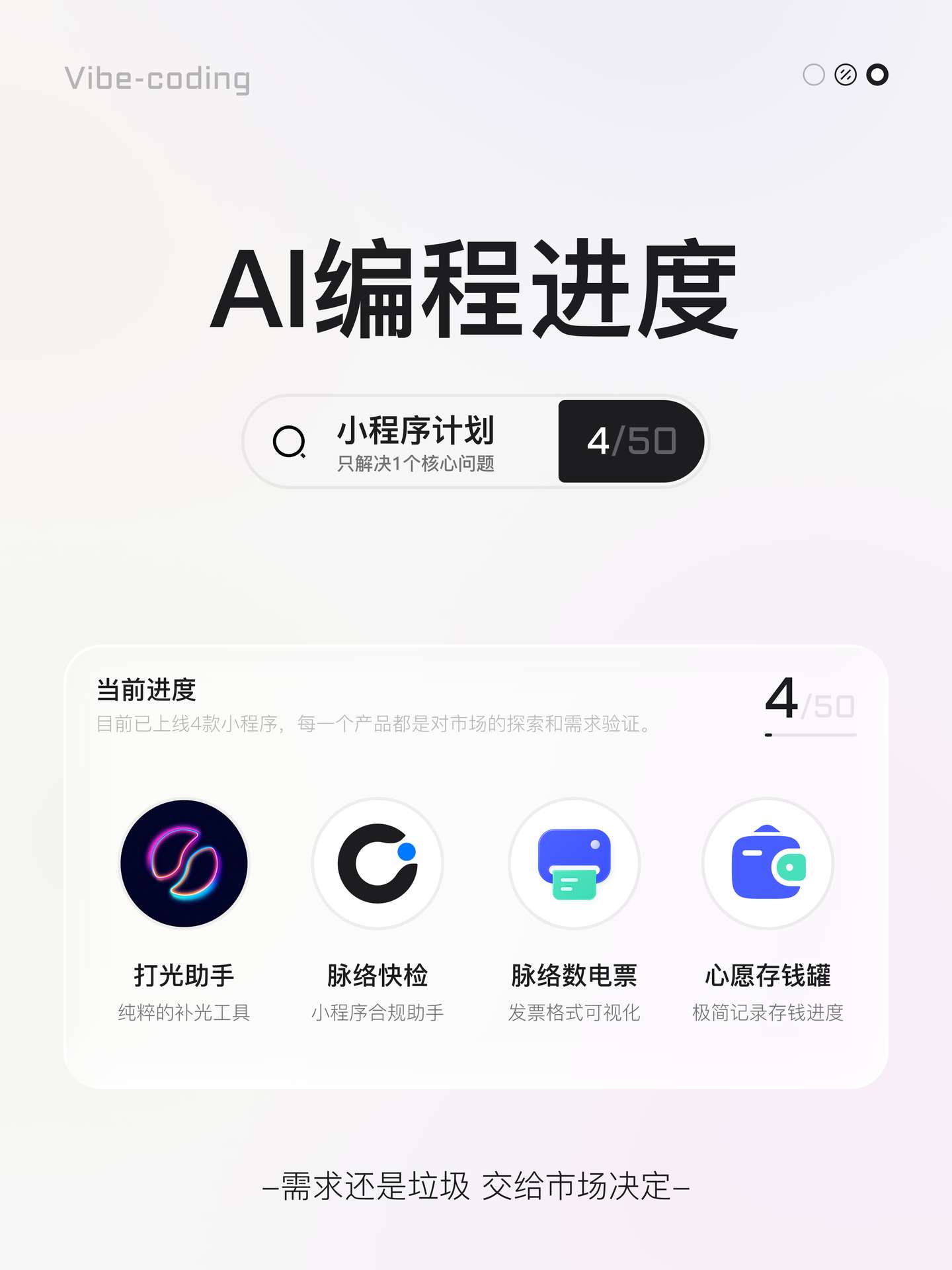
Case Study: Lighting Assistant - My Dopamine Generator
Many ask me what the hardest part of independent development is. Is it the technology? The promotion? No, it’s the initial phase of complete lack of positive feedback - the “dark years.”
Independent development, freelance design, and being a one-person company mean no regular paycheck, no boss’s praise, and no colleagues to share the load. You face only error messages and zero daily active users.
Last year, while working on some directing-related tasks, I discovered that there were dedicated control apps for inexpensive lighting equipment. I had a simple thought: since smartphone screens are so bright, why not use a phone screen as a minimalist “light board”?
Driven by this idea, I created my first small program in half a day: “Lighting Assistant.”
Technically, it posed no barriers. But it provided me with something crucial that changed my career trajectory - instant feedback.
Watching my code transform into an interface that could adjust color temperature and brightness on a phone, and seeing it used on set, gave me an unparalleled sense of control: “I created something that solved a real problem.”
This is why so many say Vibe-coding is addictive. Don’t underestimate simple needs; as a beginner, you need these “quick wins” to fuel your emotional resilience against larger challenges.
Phase Two: The Cost of Getting Stuck in B2B Mud and “Code Self-Indulgence”
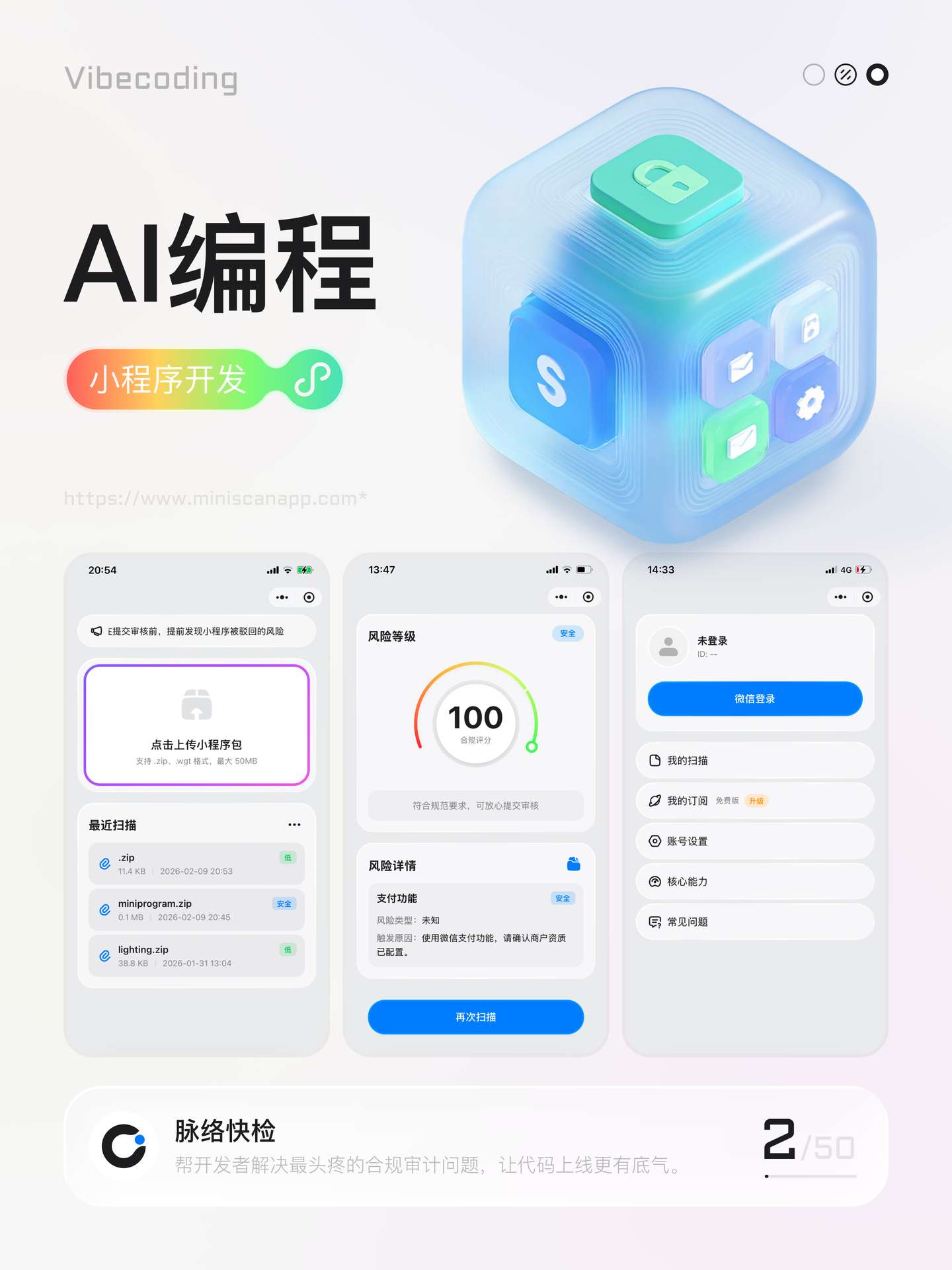
Case Study: Quick Check - The Lesson from 70,000 Lines of Code in 2 Days
After the success of my first small program, I became overconfident and started tackling a massive project.
During the development process, I found that “compliance review” was an incredibly torturous step. Filing, qualifications, sensitive word filtering, user-generated content review… For inexperienced individual developers, a single mistake could lead to official re-examination, wasting a lot of time.
Thus, I decided to create an all-in-one detection tool: “Quick Check.” I aimed to cover 14 categories of review points, attempting to help developers avoid pitfalls.
To perfect this complex detection logic, I fell into “code self-indulgence.” I once wrote over 70,000 lines of code in just 2 days (including AI optimizations). At that time, I felt invincible, as if I had built a grand system.
But reality quickly taught me a lesson: this was the product that took the longest time to develop and was the hardest to promote.
- Pain Point 1: Overly Niche Audience. B2B users (individual developers, software studios) are already a small base, and most have their own development habits, making it hard to change them.
- Pain Point 2: Inability to Form a Complete Loop. No matter how tight my detection logic was, the final decision for launch still rested with the official reviewers. I couldn’t provide a 100% “get out of jail free card.”
My lesson is: when you’re a one-person team, never easily tackle heavy B2B workflow tools, especially without validating your MVP. The amount of code does not equate to commercial value; true need is what matters.
Phase Three: Resisting the Urge to Do It All and Precisely Addressing Niche Pain Points
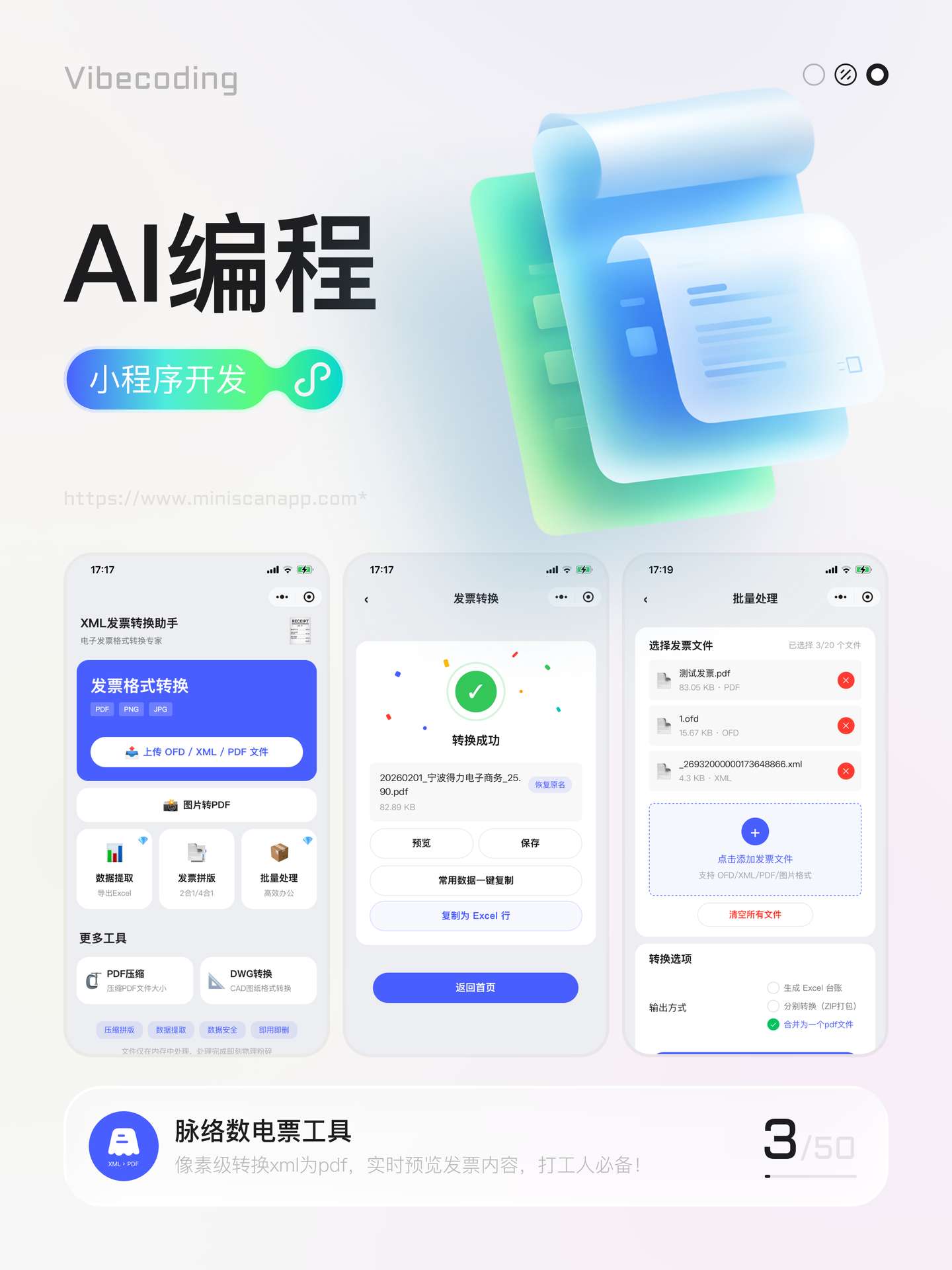
Case Study: Digital Invoice - From “All-in-One” to “Single Point Breakthrough”
After recognizing the pitfalls of heavy tools, my thinking underwent a real transformation.
Initially, I had a grand plan: to create a “super document tool” supporting over 400 formats. After all, it was just a matter of a few more AI whips. But I soon realized that creating a large and comprehensive product is a shortcut to failure for independent developers. You can never outpace the giants, and users can’t find focus among your myriad features.
At that time, due to tax issues, I frequently interacted with an accounting firm. I keenly identified a highly specific yet frustrating pain point: Digital Invoices (fully digitized electronic invoices).
After the rollout of digital invoices, many invoices circulated in XML or OFD formats. However, many non-financial personnel (like regular employees or small business owners) found these files either unreadable or filled with garbled text. Their real demand was not to process it with any professional financial system; they just wanted to “take a look” - to convert XML into a readable invoice image or PDF, that’s all.
I searched through dozens of related websites and small programs, finding that everyone was creating comprehensive financial software, yet no lightweight tool addressed this extremely specific “visualization” need.
So, I decisively cut the so-called “400 format collection” and concentrated all resources to create a completely independent tool: “Digital Invoice.”
It only solves one thing: elegantly converting XML/OFD into visual files. As for later batch processing and data export, those are additional features that will be added after the core need is validated. Even now, I often use it myself.
My realization is: don’t aim to be a “Swiss Army Knife”; instead, be a sharp “scalpel.” While big companies are competing on the highways, seek out those muddy paths yet to be paved with asphalt.
Phase Four: Transforming Advantages into a Moat, Infusing Your Product with Your “Soul”
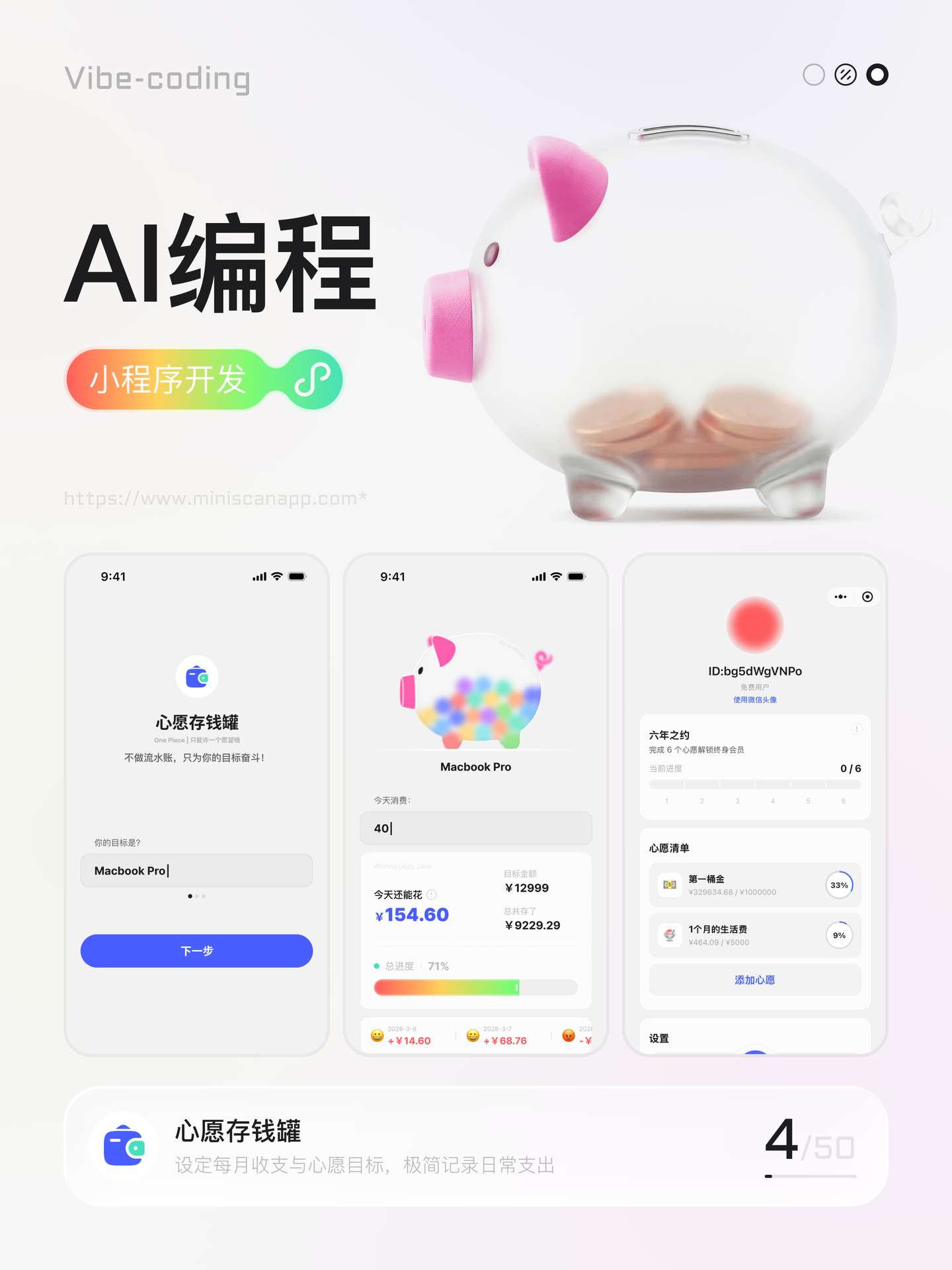
Case Study: Wish Piggy Bank - The Intersection of Aesthetics and Psychology
As a UI designer, I often feel conflicted: in an age where AI can generate interfaces with a click, is my design background still valuable?
Until I created the “Wish Piggy Bank.”
This was a small toy I made for myself to keep track of my expenses while working part-time. Typically, when using AI to write code, I rarely open design software, but this product was the only one where I seriously created high-fidelity designs in Figma.
Instead of traditional cold reports, I made it a piggy bank with a frosted texture, where the capacity visibly increases with deposits.
Why? Because saving money is against human nature’s delayed gratification; people need “visible progress” for short-term visual stimulation. Every time the water level rises, it’s a psychological massage.
This is something AI cannot provide. AI can generate code and beautiful images, but it cannot control that tactile experience between interaction and psychological suggestion.
I didn’t compete with complex accounting apps; I simply used my strongest UI visuals to refine the small act of “saving money” to perfection. This made me realize that in an era where everything can be copied, your taste, your obsession, and your attention to tactile experience are your strongest moats.
Conclusion: Three Personal Tips for Independent Developers
Now, I am still steadily advancing my plan for a “matrix of 50 small programs,” but my pace is constantly being adjusted, which aligns with my initial expectations. If you also want to dive full-time into independent development, remember these points:
- There are no sudden inspirations, only overlooked “personal troubles.” Products that solve your or your friends’ pain points, no matter how small, have value. Don’t fantasize about lofty demands; focus on moments when you’ve complained about something being “hard to use.”
- Writing code without validation is like slow suicide. After finding your entry point, use the roughest method (even manually pretending to be AI) to validate your MVP. Your time is your only cost; don’t blindly reinvent the wheel, or you’ll end up with 50 pieces of electronic junk and exhaust your mental energy.
- Resist the urge to be a jack-of-all-trades; find your “non-consensus.” In this oversaturated production environment, big companies can do everything. Your winning probability lies not in “doing more” but in “doing precisely,” leveraging your absolute advantages (like my UI design) to build an irreplaceable experience in a highly specific field.
The world doesn’t need another mediocre all-in-one app, but it always rewards those who excel at one thing.
Comments
Discussion is powered by Giscus (GitHub Discussions). Add
repo,repoID,category, andcategoryIDunder[params.comments.giscus]inhugo.tomlusing the values from the Giscus setup tool.